When you fall in love with a stone, you’re usually looking at two things:
- The stone itself (granite, limestone, quartzite, etc.)
- The finish/texture that gives it its final character
That second piece – the finish – is where the real magic happens. The same stone can look sleek and modern, rustic and old-world, or somewhere in between… just by changing how the surface is treated.
This guide breaks down common cut stone and veneer finishes/textures, what terms like bush-hammered and flamed actually mean, and which finishes work best for different applications around your home.

Why Stone Finish Matters
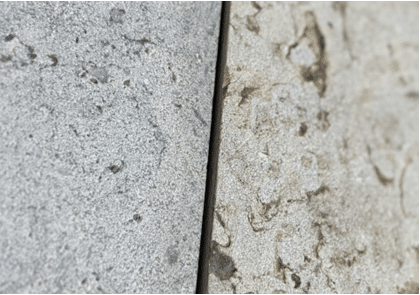
Before we dive into definitions, it helps to know why finish is so important:
- Appearance & style – Smooth and reflective? Soft and matte? Rough and rugged? Finish drives the overall design vibe.
- Slip resistance – Crucial for pool decks, patios, stairs, and driveways. More texture usually means more grip.
- Comfort underfoot – Bare feet, high heels, kids running around – some textures feel better than others.
- Maintenance – Highly polished stones show etches and scratches more easily; very rough textures can trap dirt.
- Indoor vs outdoor performance – Sun, rain, and foot traffic all interact differently with each finish.
At Peninsula Building Materials, you’ll see many of these finishes on display in our showrooms and yard, often on the same stone, so you can compare side-by-side.

Common Stone Finishes & Textures (Defined)
1. Polished
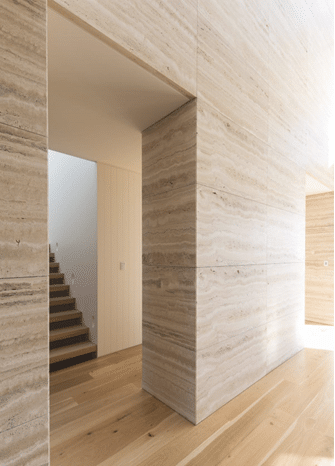
What it is:
A high-gloss, mirror-like finish created by progressively grinding and buffing the stone with finer abrasives.
Look & feel:
- Very smooth, reflective surface
- Deepens stone color and pattern (veining really pops)
- Feels sleek and luxurious
Best applications:
- Interior fireplaces and feature walls
- Bathroom vanities and some countertops
- Formal indoor floors in lower-traffic areas
- Accent pieces and trim
Things to consider:
- Can be slippery when wet – usually not ideal for pool decks or exposed outdoor stairs.
- Shows etching and scratches more easily on softer stones (like limestone, marble, and some travertine).

2. Honed
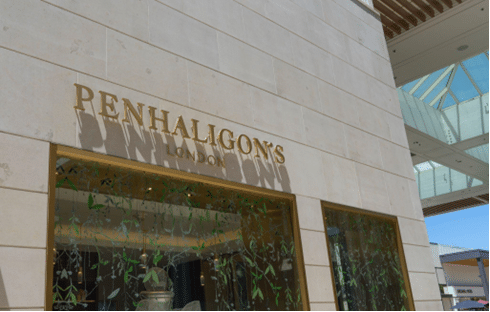
Bottom-Ledge Cottonwood Wall Cladding in a Honed Finish
What it is:
A smooth, matte finish. The stone is ground flat like a polished surface, but the process stops before it gets shiny.
Look & feel:
- Soft, low-sheen surface
- More understated and contemporary than polished
- Color is rich but less intense than polished
Best applications:
- Interior floors (kitchens, living rooms, entryways)
- Countertops and bathroom surfaces
- Fireplace surrounds and wall cladding
- Exterior stone where you want a clean, refined look without high gloss
Things to consider:
- Slightly more slip-resistant than polished, but still smoother than heavily textured finishes.
- Good balance of beauty and practicality for many Bay Area homes.

3. Leathered / Brushed / Antiqued
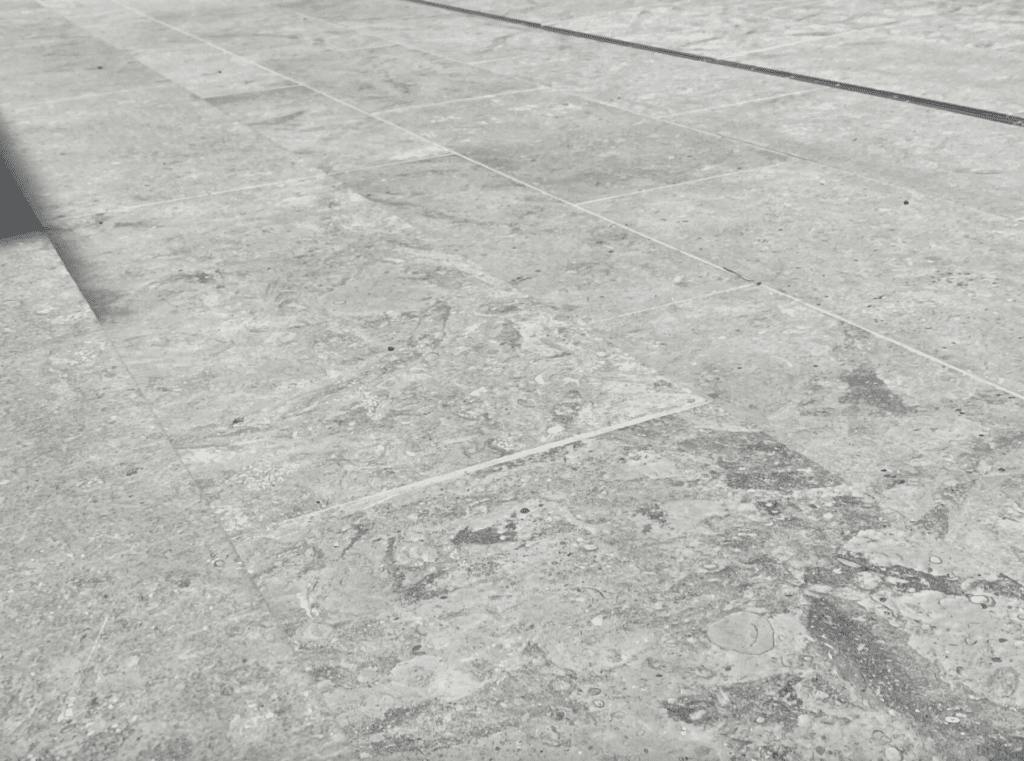
(Names vary a bit by fabricator and supplier, but the idea is similar.)
What it is:
The stone is first honed, then brushed with special pads or brushes to create a subtle texture that follows the stone’s natural pattern.
Look & feel:
- Softly textured, “alive” surface with a slight undulation
- Adds warmth and character – not shiny, not rough, just tactile
- Often slightly darkens the stone color
Best applications:
- Kitchen countertops (especially darker granites and quartzites)
- Interior floors where you want more interest than honed
- Feature walls and fireplaces in modern rustic designs
Things to consider:
- Hides fingerprints and minor wear better than polished.
- Feels more organic and less formal, great for indoor-outdoor living spaces.

4. Flamed (a.k.a. Thermal)
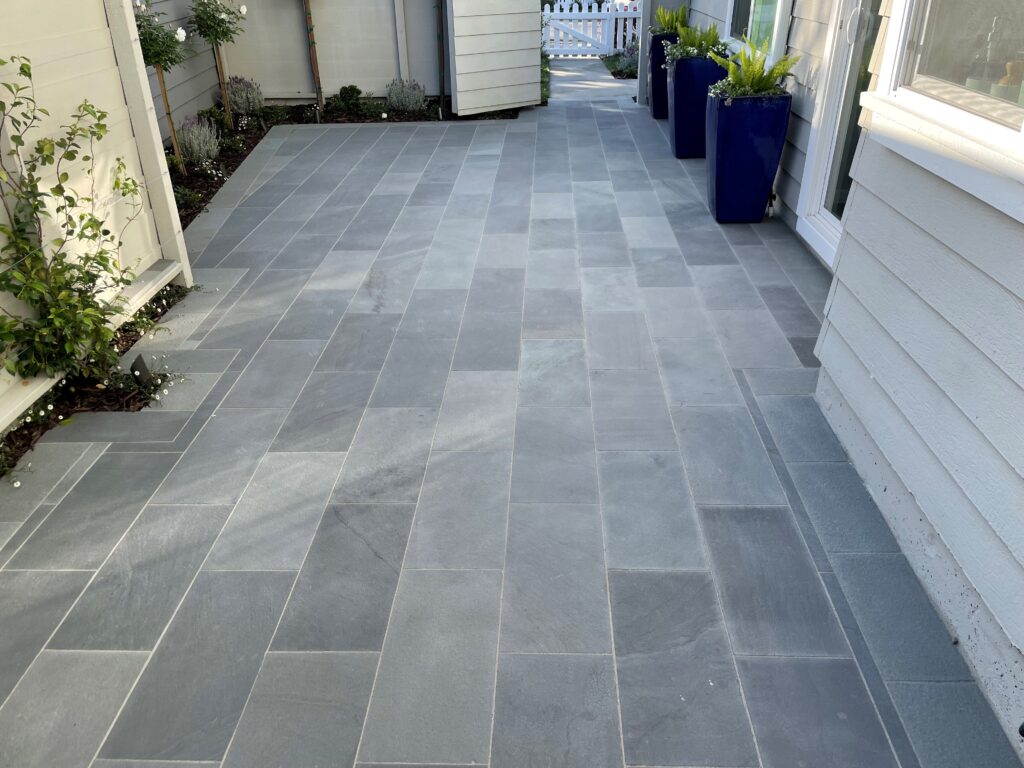
Bluestone Blue Selected Flamed/Thermal Paving
What it is:
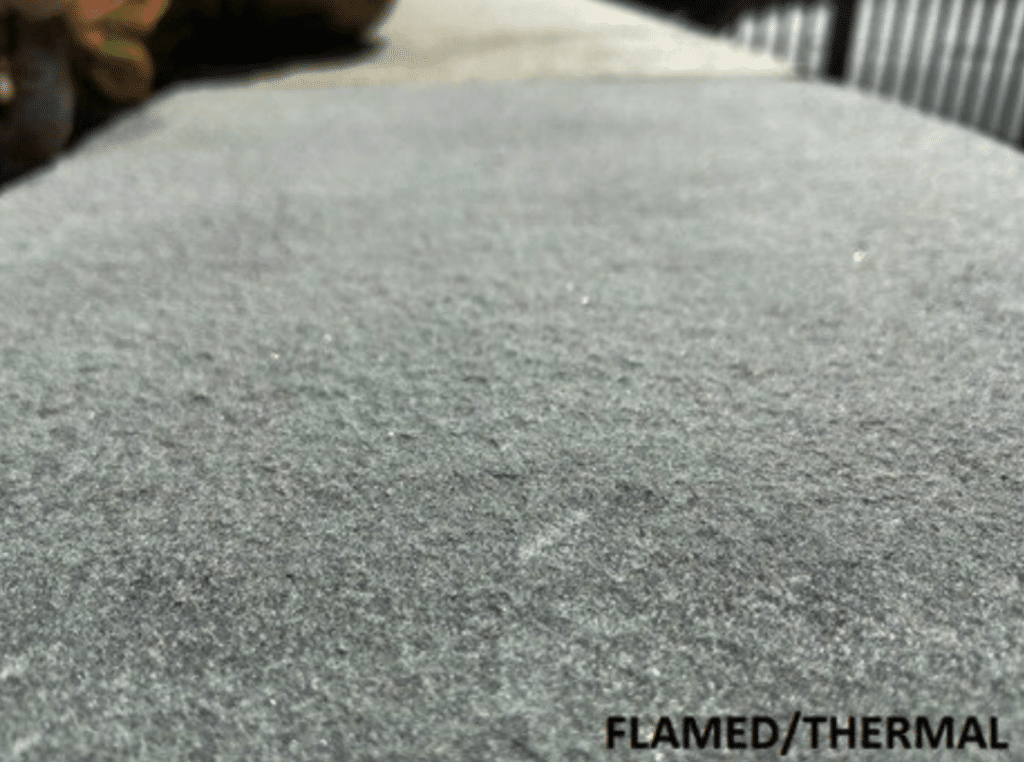
The surface is exposed to intense heat (usually from a flame torch) and then rapidly cooled. Different minerals in the stone pop and spall slightly, leaving a rough, textured surface.
Look & feel:
- Gritty, slip-resistant texture
- Color may lighten a bit or become more variegated
- Strong, rugged character – often seen on granites and some quartzites
Best applications:
- Pool decks and spa surrounds
- Patios and walkways
- Driveways (especially with granite or dense stone)
- Exterior stairs and landings
Things to consider:
- Outstanding slip resistance – a top choice for wet areas.
- Works especially well on dense stones (commonly granite).

5. Bush-Hammered
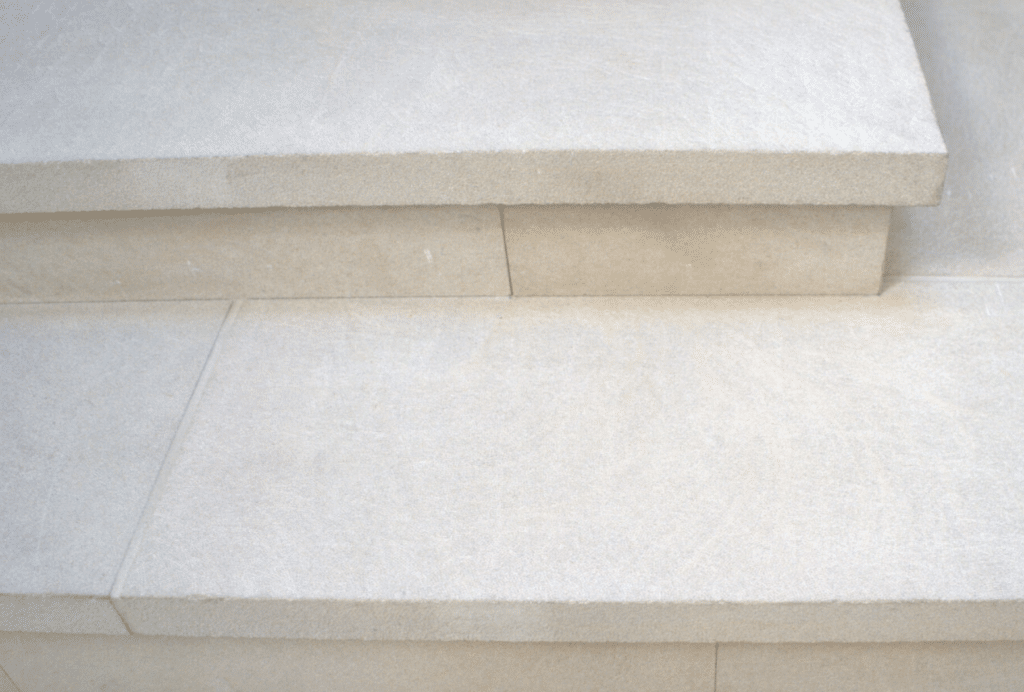
Plaza Buff Bush-Hammered Stair Treads
What it is:
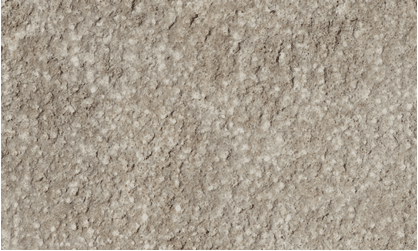
The stone is mechanically or manually pounded with a tool that has multiple small points, creating a densely dimpled surface.
Look & feel:
- Uniform, textured surface with tiny “craters”
- Very tactile and visually interesting
- Can create a slightly lighter, more uniform color appearance
Best applications:
- Exterior stairs and treads
- High-traffic walkways and public-facing hardscape
- Accent bands or borders in exterior masonry
- Contemporary facades where a strong texture is desired
Things to consider:
- Excellent traction – great where code or safety is a concern.
- Surface can be more challenging to keep perfectly clean in very dusty environments, but in most residential settings it’s very manageable.

6. Sandblasted
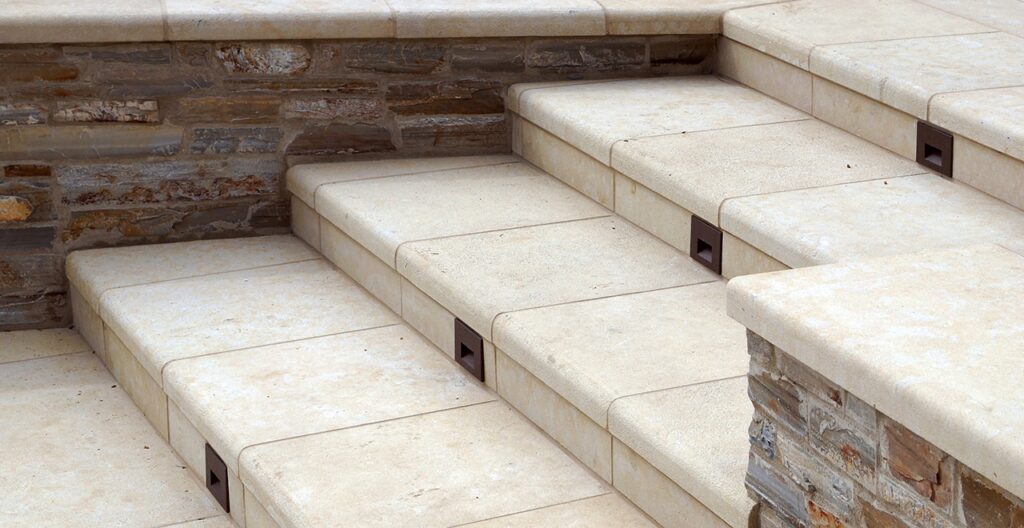
What it is:
A stream of abrasive material is blasted at the stone to slightly erode the surface and create a fine texture.
Look & feel:
- Fine, even, slightly “grippy” texture
- Softens color and reduces visual glare
- More subtle than bush-hammered or flamed
Best applications:
- Pool decks and patios
- Coping, caps, and treads where moderate texture is needed
- Exterior paving where you want a more refined feel than flamed
Things to consider:
- Very versatile – a nice middle ground between honed and heavily textured finishes.
- Often combined with sawn or straight-cut edges for a clean, modern look.

7. Tumbled
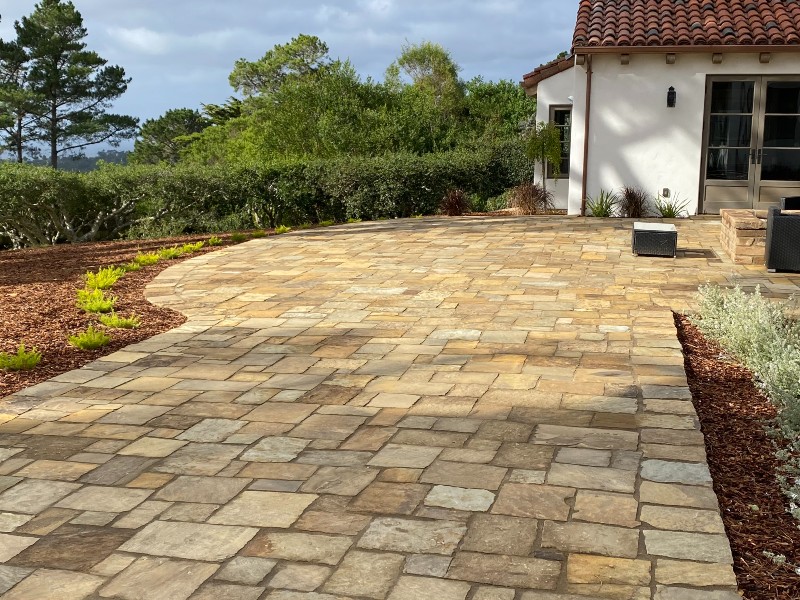
What it is:
Smaller pieces of stone are literally tumbled in a drum with abrasives and sometimes water. Edges are softened and faces are worn slightly to mimic age.
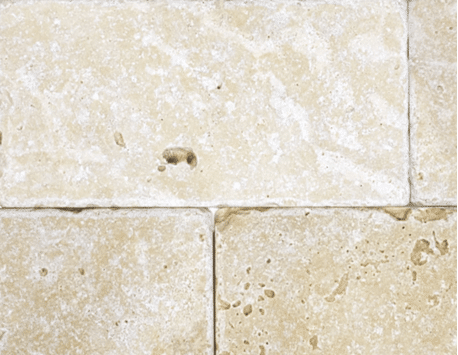
Look & feel:
- Rounded corners and edges
- Soft, weathered appearance, sometimes with light pitting
- Perfect for old-world or Mediterranean-inspired designs
Best applications:
- Garden paths and intimate patios
- Courtyards and entryways with a rustic or European feel
- Stone veneer on garden walls, seat walls, and small retaining walls
Things to consider:
- Very forgiving of wear and time – it already looks “lived-in.”
- Slight texture adds grip, but very uneven tumble can be less ideal for high heels or rolling carts.

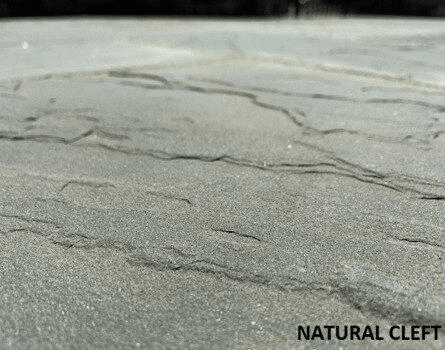
8. Split-Face / Natural Cleft
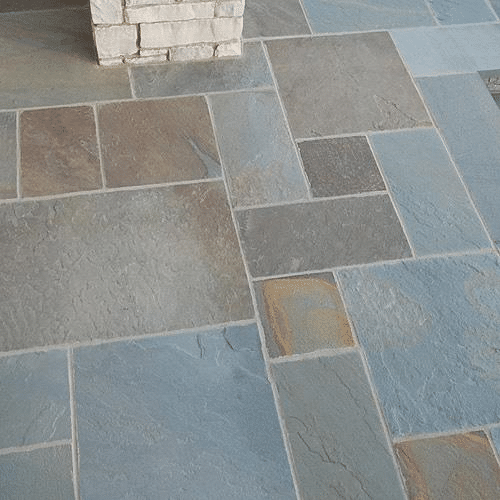
Bluestone Full Range Natural Cleft
What it is:
The stone is split along its natural layers or bedding planes, exposing its natural, rough face.
Look & feel:
- Bold, dimensional texture
- Strong shadow lines and visual depth
- Very natural and organic appearance
Best applications:
- Stone veneer on walls and fireplaces
- Pillars, columns, and exterior facades
- Accent walls in living rooms, entry halls, and outdoor rooms
Things to consider:
- Primarily a vertical application finish (too rough for most flooring).
- Fantastic as an accent next to smoother finishes like honed or sawn.

9. Sawn / Sawn-Face
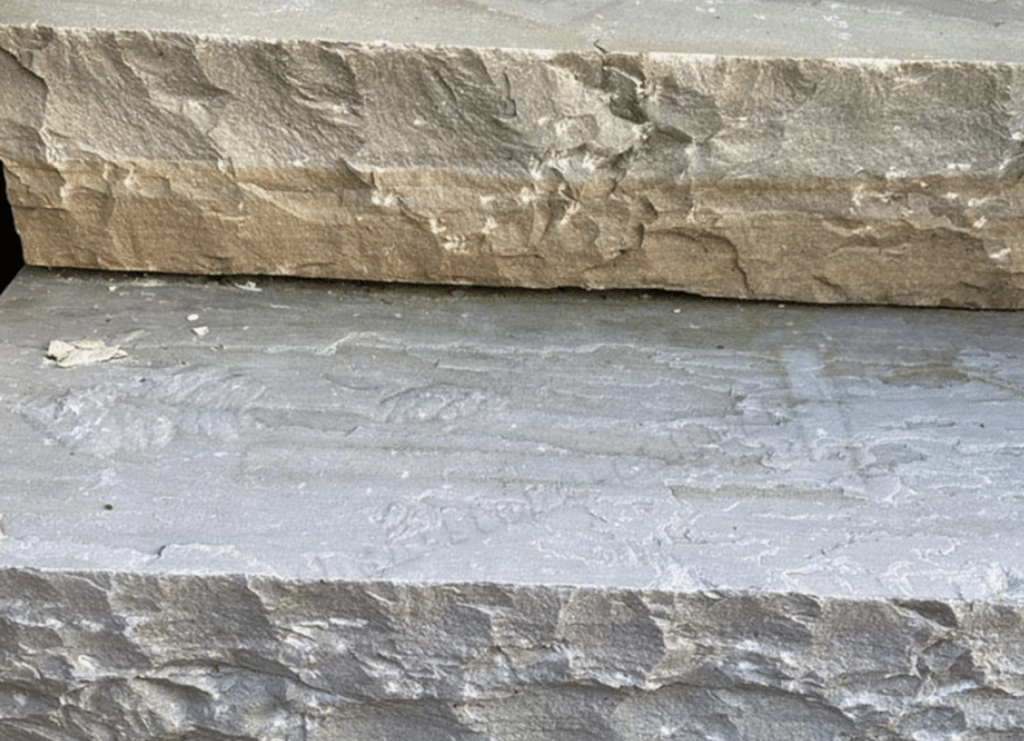
What it is:
You’re seeing the freshly cut stone surface as it comes off the saw. It may be left as-is or lightly finished.
Look & feel:
- Very flat and true, often with a fine blade pattern or subtle texture
- Edges can be crisp and square – ideal for modern layouts and tight joints
Best applications:
- Paving where tight joints or patterns are desired
- Stair treads and wall caps
- Thin veneer panels with clean, contemporary lines
Things to consider:
- Sawn surfaces are often combined with other finishes (e.g., sawn edges with flamed top, or sawn backs with split-face fronts for veneer).

Matching Stone Textures to Real-World Applications
Here’s how to think about finishes when planning different parts of your project.
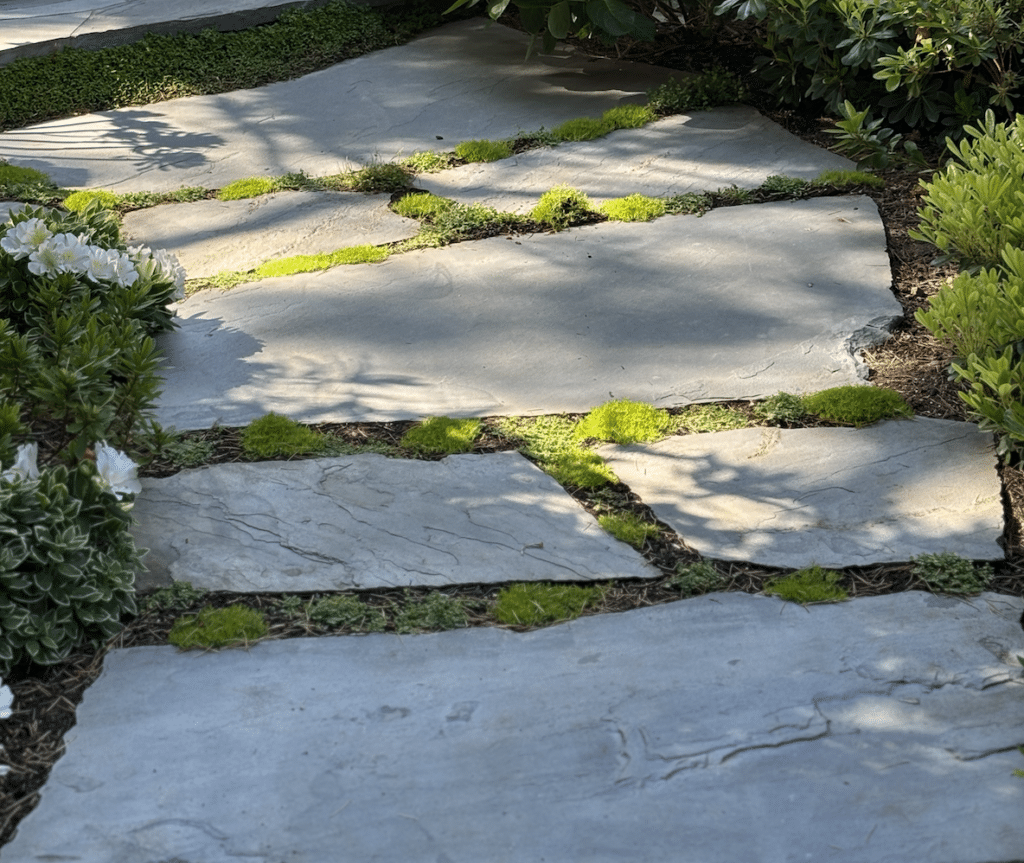
Natural Cleft Blue Select Bluestone Flagstone Garden Path
Patios & Garden Paths
Priorities: comfort underfoot, slip resistance, design style.
Great options:
- Flamed or thermal – for higher-traffic patios and walkways
- Sandblasted – for a refined but safe surface
- Natural cleft – as long as the variation in thickness is managed properly during installation
- Tumbled – for smaller pavers and a relaxed, old-world feel
Try to avoid highly polished finishes outdoors where surfaces get wet.

Pool Decks & Spa Areas
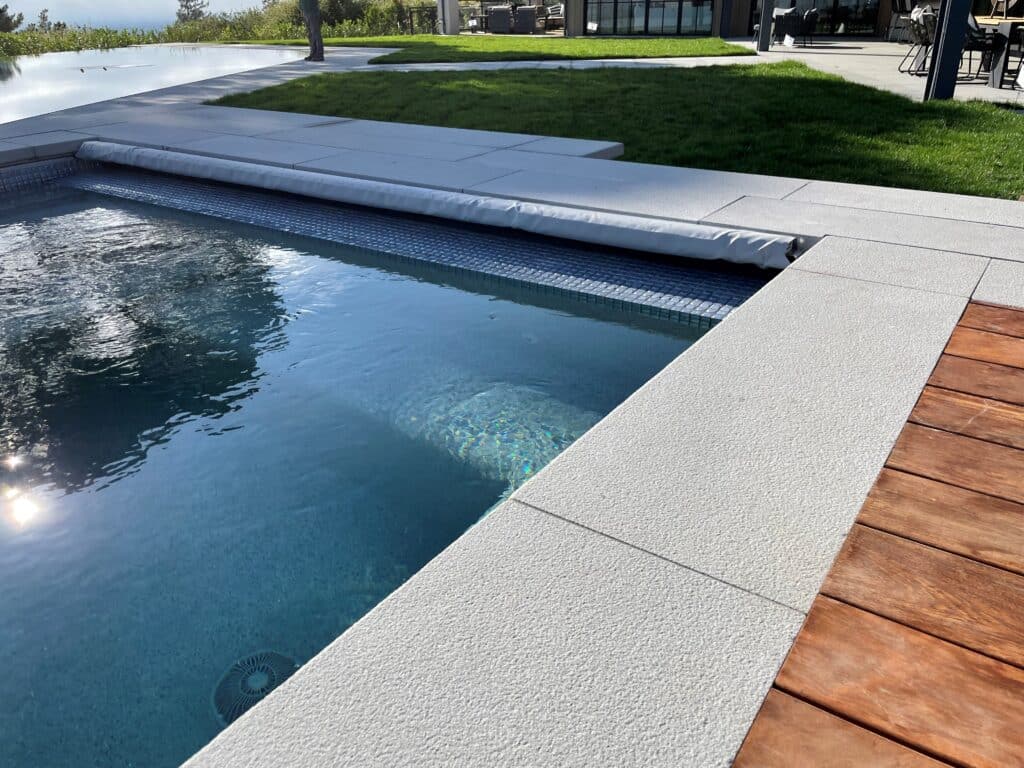
St. Cormeli Italian Bluestone Pool Coping in Bush-Hammered Finish
Priorities: slip resistance, comfort for bare feet, resistance to heat and chlorine/salt.
Great options:
- Flamed or sandblasted stone
- Some bush-hammered surfaces
- Soft tumbled finishes for smaller stones
Look for:
- Light to medium colors (stay cooler in the sun)
- Textures that are grippy but not sharp

Driveways
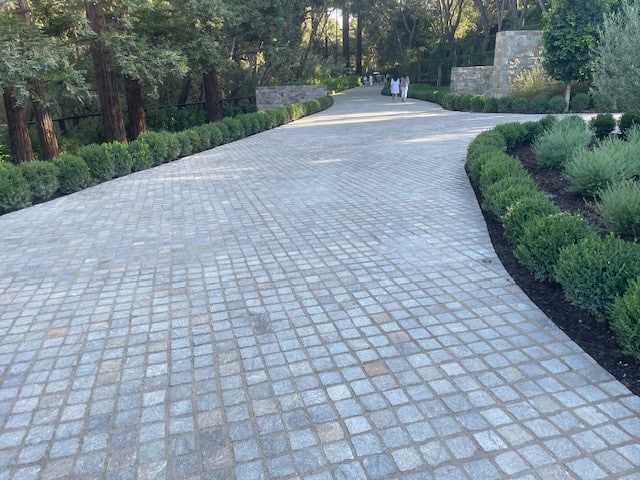
Porphyry Cobbles – Natural Finish
Priorities: strength, traction, and long-term durability.
Great options:
- Flamed or bush-hammered granite or other dense stone
- Textured stone pavers with split or textured faces
Avoid:
- Very smooth finishes that can become slippery, especially when wet or dusty.

Steps, Landings & Treads
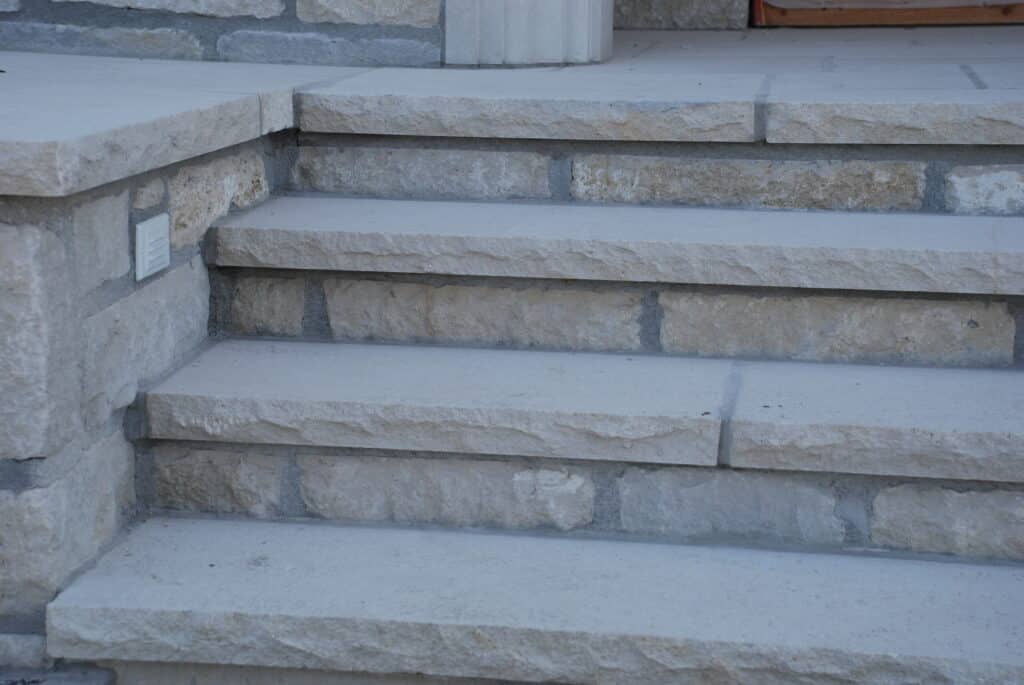
Sawn + Sand-Blasted Limestone Treads
Priorities: safety first, then style.
Great options:
- Bush-hammered, flamed, or sandblasted treads
- Sawn or honed treads with a textured nosing strip for added grip
On the risers (vertical faces), you can get more expressive:
- Split-face veneer for dramatic steps
- Honed or sawn faces for a cleaner, architectural look

Fireplaces & Feature Walls
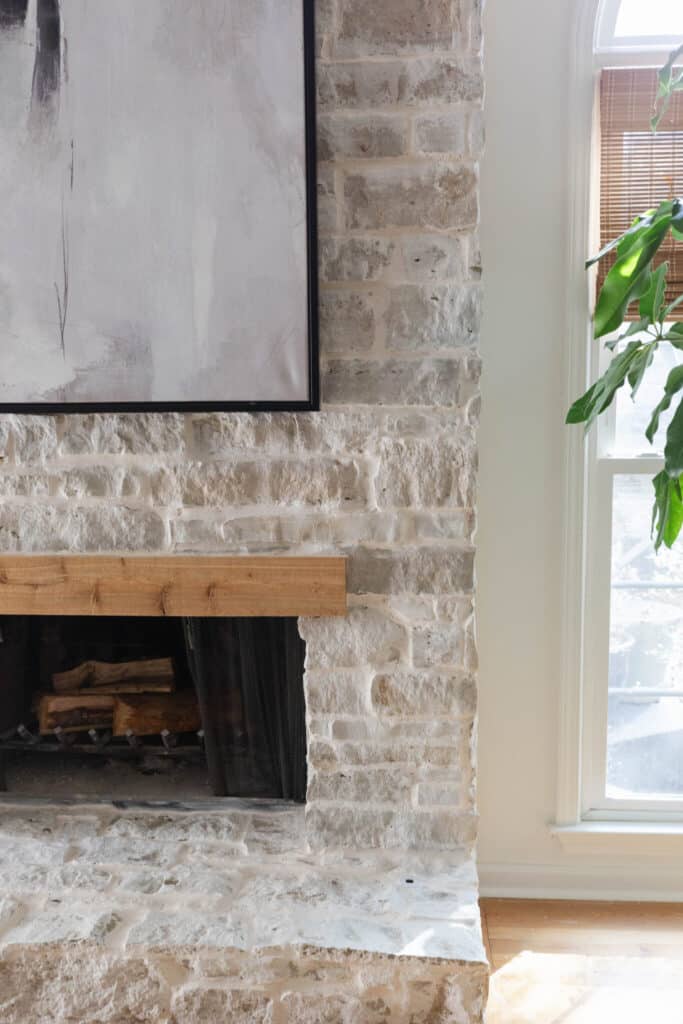
Fond du Lac Country Squire Thin Veneer – Split-Face
Here, texture is your friend.
Great options:
- Split-face or natural cleft veneer for bold, 3D texture
- Honed panels for a sleek modern look
- Tumbled or lightly textured stones for a softer, traditional feel
Mixing finishes can create stunning results: for example, split-face fieldstone with a honed stone mantel and hearth.

Indoor Floors
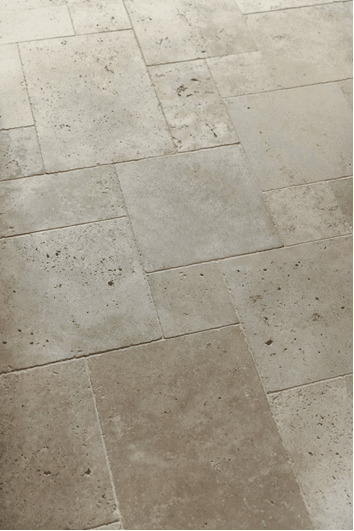
Tuscany Beige Tumbled Travertine
Priorities: comfort, ease of cleaning, style.
Great options:
- Honed – the go-to for many interior floors
- Lightly brushed/leathered – adds character and hides small wear
- Tumbled – in smaller formats for cozy, cottage or Mediterranean aesthetics
Polished can work in low-traffic, formal rooms but is less forgiving of wear and spills.

How Peninsula Building Materials Can Help
Choosing a stone is one decision. Choosing the right finish for the right space is another – and it’s where seeing and touching the material in person really matters.
At Peninsula Building Materials, we:
- Showcase many stones in multiple finishes so you can see the difference
- Help you match finishes to specific applications (pool vs driveway, formal interior vs garden path)
- Coordinate with your contractor, mason, or designer so the stone you select installs and performs as expected
Whether you’re planning a Bay Area patio, driveway, outdoor kitchen, or a statement fireplace, our team can walk you through which finishes and textures will give you the look you want and the performance you need.

Ready to Explore Stone Finishes?
If you’re unsure whether your project calls for honed, flamed, bush-hammered, tumbled, or something else, you don’t have to guess.
- Visit one of Peninsula Building Materials’ showrooms to see and feel different finishes in person.
- Bring your plans, photos, or design ideas – we’ll help you narrow down the best options.
- Or reach out online to connect with a PBM stone specialist and start planning your next project.
The right stone is important.
The right finish makes it unforgettable.